Thursday, October 2, 2014

Unlearning the Myths That Blind Us - Christensen


      "Unlearning the Myths That Blind Us" by Linda Christensen, was eye-opening to say the least. The article centers around children's cartoons and Disney Movies and the stereotypes that they create for their young viewers. Christensen describes how she had her students read and react to Dorfman's book, The Empire's Old Clothes: What the Lone Ranger, Babar, and Other Innocent Heroes Do to Our Minds. Dorfman's harsh taste of reality forced her students to have to accept that the "innocent and cute" movies that they grew up with had been teaching them corrupt morals and depraved messages. As the students dove deeper into these cartoons, the stereotypes became more blatantly obvious. Women, men, people of color, and poor people in each cartoon were continually portrayed in a cliche and stereotypical fashion. Women were steadily portrayed as unrealistically beautiful with a slim waist and a flawless face who's only ambition in life was to pick up a man. People of color and poor people were consistently depicted to be "buffoons" usually being shown to be illiterate, inferior, and sometimes even savage. While men were limited to only being either handsome and powerful or old and the target of everyone's jokes.These stereotypes create underlying messages to children, leading them to believe that these are the roles that these groups of people must play in society. Also, Christensen describes the issue that most of the Disney characters are white, especially the Princesses. This is found to be very frustrating to her students of color who felt as a child that they could not relate to the Disney Princesses because there was no black princess. She gives them an article to read called "Cindy Ella", about an African American girl who is given a new wardrobe so that she can become more appealing and find herself a man. Although the story finally portrayed a woman of color, it still created the same stereotypes that a woman's only ambitions in life should be to find a husband.

        The article reminded me of a video I have watched by a popular You Tube personality, Jenna Marbles. The (somewhat inappropriate) video titled, "What Disney Movies Taught Me", pokes fun at the Disney movies and the negative messages they teach kids. The video mostly centers mostly around the sexist stereotypes the Disney Princess create that a woman's only goal in life should be to find a man to marry, as well as the false-body images they produce to their young female audience. The video also jokes about the stereotypes of the characters that do not fit society's view of "pretty" and how they are continually illustrated to be mean or evil. For example, Ursula from The Little Mermaid, Cinderella's step mom, and the witch from Snow White. Even though the video is meant to be comical, it does relate to Christensen's argument and expose the flaws in these movies and the negative morals and stereotypes they form.

    Christensen asks us to challenge the stereotypes that cartoons create and to make a change. It is important for us to stop being ignorant not only to what these movies teach us but also the same stereotypes that are practiced in magazines, on TV, and on billboards all around us. Sexism and racism is everywhere and these cartoons only add to it. As a nation, as hard as it is, we must open our eyes to the values these movies are creating for us from a young age. We must make a stand against them and demand for a change so generations to come are not raised with these mixed messages and corrupt stereotypes. 

Safe Spaces - August

    In the article "Safe Zone"by Gerri August, she describes how classroom spaces have an effect on all of us. This is why it is important for teachers to keep a secure environment inside their classrooms, especially for students of the LGBT community. August explains her argument by connecting it to Johnson's, "Privilege, Power, and Difference" and the SCWAAMP exercise we did in class when she says, "Heterosexisim is one of those unexamined avenues of privilege. Assumptions that everyone is (or should be) heterosexual shape most classroom interactions, whether academic or social"(84). I found this quote interesting because I  attended a school that was very supportive of the LGBT community, we even had a program called "the gay-straight alliance". This made it more comfortable for many of my gay friends and fellow classmates to be open about their sexual orientation and to be accepted by their peers. Because of this, I find myself at sometimes being ignorant to the fact that heterosexism is a privilege in our society and that it is something that as a future teacher I will need to be aware of so that I can make my classroom space comfortable and safe for any student, no matter what their sexual orientation.

      August discusses how teachers can make their classrooms more secure for students of the LGBT community. The main point that she makes is adding sexual orientation topics into school curriculum. She addresses that teachers talk about families coming in all different forms, but rarely teach about families with two moms and their children or two dads and their adopted daughter. By doing this, heteronormative beliefs are reinforced. August further explains the public's negative attitude towards teaching students about gay families and accepting them as a new social-norm. August gives an example of this when she explains a PBS series, Postcards from Buster, a show starring an animated rabbit that travels around North America to visit children and families to teach him about their local culture. In one episode, "Sugartime" Buster meets three children that come from a family consisting two moms. Although, a gay family was represented in the episode, the words "gay" or "lesbian" where never used. Even so, PBS pulled the episode because they believed that parents would not want their children "exposed to the lifestyles portrayed in the episode". Cutting this episode, adds to the deprivation of the education of sexual orientation for children, which only keeps Heterosexism a privilege in modern society as well as keeps students of the LGBT community feeling embarrassed and distressed in the classroom. In result, the generation in which Postcards from Buster was intended for will grow up being uneducated about gay and lesbian families and culture. By the time it is introduced to them in adulthood it will be a foreign concept to them and it will be believed to be "unconventional"and they will be least likely to accept it. August argues that teachers need to be aware of this and educate students from an early age about sexual orientation so that  these children will be more accepting of the LGBT community and as a result will help to keep a "safe space"in their classrooms. 
Family from "Sugartime" episode


Sunday, September 21, 2014

Aria - Rodriguez, Teaching Multilingual Children - Collier

         The article, "Aria" by Richard Rodriguez, describes his personal journey as a immigrant attempting to learn the English language. He remembers that at first as a bilingual student, he struggled in school to become comfortable with English. After a parent-teacher meeting at his home, his family agreed to speak English in the home in hopes to improve his academic performance at school. After coming accustomed to hearing English more and more in both his home and school life, Rodriguez became more accustomed to the language. Although Rodriguez, encourages immigrants who are in his same situation to make English their main language, he explains how it separated his connection with his family. He also details his deep sadness in no longer speaking his native tongue on a day to day basis.
            Reading Rodriguez's article reminded me of an personal experience I had with a bilingual class mate of mine. I remember on my first day of first grade, I was seated next to an unfamiliar face. I looked at the boy's name tag on his desk and saw that his name was Achille. As I tried to speak to him and get to know him better, I realized that he became overwhelmed and began to cry. I later in the day found out that he was a new student from France and that he knew no English. As the year went on, he became more familiar with the English language, he accounted it to the fact that his parents also made an effort to speak English at home. Within a couple years of being at our school he became fluent in English and even admitted to not remembering a lot of French. It was apparent, that that much like Rodriguez that even though he knew that he needed to speak English to be successful in America, he passionately missed his French roots. I never realized what a struggle it would be for a bilingual student to give up their native tongue, which once brought them so much comfort.  
                                "Once upon a time there was a grown-up who loved children. 
One child who came to know this person was eager to find out 
about many things. Together they discovered the intimate secrets 
of time and space and nature and the way things work. They 
played with language. They both grew in wisdom and they 
learned how infinite and mysterious knowledge is ..." (222)
    
       The other article, "Teaching Multilingual Children" by Virginia Collier was consistent with Rodriguez's argument. The article discusses the difficulty of being a teacher in a multilingual classroom and the challenges that it comes along with, such as teaching two languages or confirming the cultural values at home and at school. The article provides helpful tips to teachers who want to help teach English to their students as well as create a rewarding experience for themselves. One of the tips that I really appreciated was, "3. Don't teach the language in a way that challenges or seeks to eliminate the first language"(227). I found this tip to be extremely helpful as an inspiring teacher who will have to deal with multilingual students in the future. This was a tool that Rodriguez's teachers did not seem to use since they made him feel that he was wrong for his usage of his "home language" at school. Collier explains that as a teacher, our mission is to help our students become fluent in their academic language but also give them the tools to continue sufficiently speaking their native language in the outside world. I found this article to be very informative, and I thought it was really  stimulating to be able to learn some tips that could not only benefit my future students but myself as a future teacher as well.
Richard Rodriguez
Virginia Collier


Saturday, September 20, 2014

White Privilege - McIntosh


     "White Privilege Knapsack" by Peggy McIntosh was considerably eye-opening for me. The article discusses the issue of white privilege, something that most white people are unaware they even have. McIntosh examines the skin-color privileges that she has for being white and how they effect her every-day lifestyle. The privileges range from anything from her being able to do well in challenging situations without being called to a credit her race, to choosing blemish cover or bandages in "flesh" color that matches her skin, or speaking for all of the racial people in her group, etc. I found reading these examples listed by McIntosh particularly interesting because I found them all to be identifiable to my own life and it made me realize those were privileges that I have been ignorant to having myself.
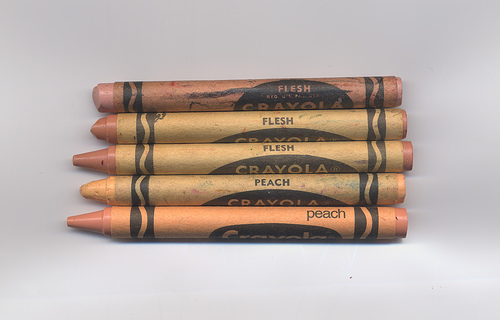
       My best friend, Thomeeka, happens to be from African American decent. For years, I saw our lifestyles as being equal but as I read this article I saw there are numerous privileges I have that she does not because I am white. One example that stuck out in my mind was the idea that the media considers "flesh" color to mean white. From my friendship with Thomeeka, I would often see her frustration with lack of make-up choices for her skin tone. Most foundations and powders are dominantly designed for women with pale skin, with many make-up brands having numerous colors for white skin tone and only one or two shades for a black skin tone. Some brands have tried to fix this and add more variety to their foundation shades and sell darker colors but it is still obvious when you go into the make-up aisle that the make-up is predominantly made for pale shades. This could also be said for band-aids and gauze, that most of the bandages I buy at CVS I can assume will blend with my skin-tone as compared to Thomeeka's. In addition, many crayon companies created a "flesh" color crayon that was beige, which certainly does not fit the whole definition of "flesh" color.


  examples of the white privilege of "flesh" color

In addition, I found "For the White Person Who Wants to Know How to be My Friend" by Pat Parker very interesting. I found it very relatable again as a white-privileged female with an African American best friend. I often find myself doing some of the things mentioned in the poem unknowingly. I often make assumptions based on her race or am sometimes afraid to make a comment because I don't want to offend her. I was able to relate my own personal experience to the quote, "If you really want to be my friend,don't make a labor of it. I'm lazy. Remember"(23). I found that to be humorous because of how sincere and true it is. White people, including myself, are quick to make racial stereotypes and also feel that they have to act a certain way around their friends of color. In reality, we should not over-think all of our reactions with our black friends, or any people of color. We should not "make a labor of it",it should just be natural. 
      Pat Parker, Writer of "For the White Person..."


Sunday, September 14, 2014

Amazing Grace - Johnathan Kozol

        Johnathan Kozol's article, "Amazing Grace", centers around the district of Mott Haven which is the poorest in the South Bronx. The families from this district attend St. Anns Church, where 95 percent of the members are poor and endure lives centered around disease, drugs, and extreme poverty. Reading about the severe and insufferable conditions the citizens of Mott Haven live in are unimaginable to someone like me who is blessed to have been raised in more stable enviornment.
       Learning about the details of circumstances these people live under was more than humbling. There were a few quotes from the article that I was apalled by. The first of these quotes came from Cliffie, the little boy from St. Ann's Church that showed the author around Mott Haven. I was at first shocked by the maturity this young boy already held as well as how selfless and giving he was for such a small child. Although, what really stunned me is when he said, "I saw a boy shot in the head right over there" (6), without much emotion according to the author. It was incredibly disheartening to see that a child like Cliffie was forced to be so mature so young. It was also extremely sad, that by Cliffie's lack of sadness by the shooting, that it was something that was not uncommon to him. This is so unfortunate, because childhood is supposed to be a time of happiness where children can be ignorant to real-world dilemas.
        Another issue that was highly discussed in the article was the amount of disese, particularly AIDS, that infested the area. Almost all of the district is effected by the illness. The hospitals are filled with patients dying from the fatal sickness. One of the stories that stuck out to me an deeply impacted me was one of a nine-year-old girl named Sylvia, who had passed away from AIDS. The author describes,
"Her mother died six months before. An intravenous user. The mother's boyfriend was 42 years old and he had AIDS as well. He raped the little girl right in her bed" (13). This was very disturbing and sad for me to read that a young innocent girl was raped and ultimately killed by this disease. The realness and rawness of this story truly effected me and opened my eyes to what is going on in the world around me and not just in the "little bubble" that I reside in. After reading this article I wanted nothing more than be able to help those living in such poverty and those who are less fortunate than I am. The severity that the people of Mott Haven live in, got me to start thinking of things I could do in my community as well as other communities to offer help.

                                               Johnathan Kozol
neighborhood of Mott Haven
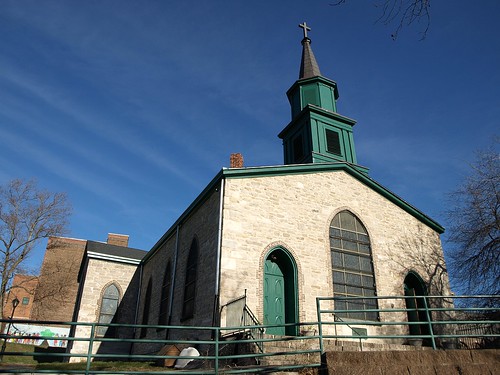
St. Ann's Church


All About Me

Hi, my name is Erika Lincoln and I am Sophmore at Rhode Island College. I am majoring in Elementary Education and specializing in English. I live in East Providence, Rhode Island and I graduated from East Providence High School in 2013. This summer I spent most of my time with my group of high school friends since during the school year they're all away at college and I don't get to see them much. I also spent a lot of my summer with my niece, Chloe, because she is my little baby-girl and she is so much fun to be around. In my spare time I babysit a 5 year-old, Olivia, and a 9 year-old, Matt. I also spend a lot of time with my pitbull Sammie, because I'm a little obsessed with her. Some of my favorite things to do are spend time with my big Italian family, as well as shopping (my addiction), and listening to music; some of my favorite artists include John Mayer, Drake, and Jhene Aiko. I am very excited for FNED 346 this fall. I am interested to get into schools and start working hands on with children and really see first-hand what I want to be doing as a career for the rest of my life. So I can't wait to see how the semester goes!